What India’s Small AI Could Mean for Agricultural Research at Busitema University
More than three million downloads in just a few months have turned an agricultural chatbot in India into an interesting case for researchers looking at how artificial intelligence can move beyond laboratories and into everyday farming.
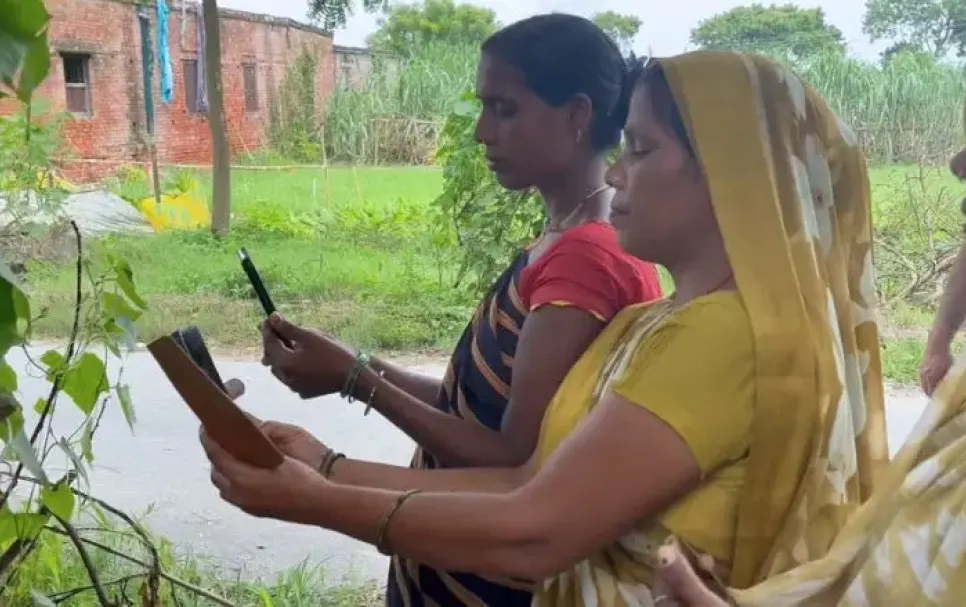
The tool, MahaVISTAAR-AI, allows farmers in Maharashtra to ask agricultural questions by voice or text using their own languages and local dialects. Instead of requiring farmers to search through different websites, offices or technical publications, the system draws from trusted sources, including agricultural research institutions and India’s Department of Agriculture, and returns short responses tailored to the farmer’s location.
According to the World Bank, farmers can use the chatbot to seek information about pests and crop diseases, local weather conditions and expected market prices. The system can translate questions where necessary and also indicates where the information used in its responses comes from, an important feature when agricultural decisions depend on the reliability of advice.
The approach is part of what the World Bank describes as “small AI”, artificial intelligence designed to address specific problems using relatively accessible technology. Rather than depending on massive computing systems, these tools are being developed for basic smartphones and for environments where internet connectivity may be unreliable.
Another example is taking shape in Kerala through the Kerala Agriculture Technology Hub and Information Repository, KATHIR. The platform is being developed by the state government with World Bank Group support and combines agricultural information with satellite imagery, remote sensing and AI-powered analysis.
KATHIR already contains data on more than three million farmers and maps more than 1.1 million hectares of crops. When fully rolled out, it is expected to provide localized weather alerts, sowing guidance and support for identifying crop diseases. Farmers will also be able to submit photographs of damaged crops and receive AI-assisted information about possible diseases and treatments.
The platform is also being designed for use beyond individual farms. Agricultural authorities can use its data to map crops, estimate yields, identify areas requiring support and improve responses to disasters. Verified farm information could also help cooperatives, banks and agribusinesses better understand farmers and develop services suited to their needs.
These developments make India’s experience relevant well beyond India.
At Busitema University, they raise research questions that sit naturally across several disciplines. Agricultural scientists could examine whether AI-generated recommendations are agronomically sound under Ugandan conditions. Computer scientists could investigate language models, image recognition, data quality and systems capable of working with limited connectivity. Environmental researchers could combine weather, land and crop information to understand how such tools might support farmers facing changing climatic conditions.
This kind of work aligns closely with the University’s emphasis on research that produces practical social and economic impact. Busitema University’s published research strategy identifies Digital Futures, agriculture and environment, and Transformative Technologies among the themes around which its research and innovation are built. It also encourages collaboration capable of improving the relevance and impact of university research.
The Indian experience also shows why developing an agricultural AI tool would require much more than adapting an existing chatbot.
A system intended for farmers in Eastern Uganda, for example, would need dependable information about the crops grown locally, common diseases and pests, soils, rainfall patterns, agricultural inputs and available markets. Researchers would also have to consider how farmers actually communicate. A technically accurate system may have little value if its advice is difficult to understand, unavailable in familiar languages or dependent on internet connections that farmers cannot consistently access.That creates room for research involving farmers themselves. Instead of being treated only as users at the end of the development process, farming communities could help researchers determine which problems deserve attention, how questions are normally expressed and whether the answers produced are understandable and practical.
The possibility of using photographs to identify crop problems is another area that could attract research interest. Building reliable image-based systems requires locally relevant datasets. Images of crops, diseases and growing conditions collected elsewhere may not always represent what farmers encounter in Uganda. Developing and validating local agricultural datasets could therefore become an important research contribution in its own right.
Questions of trust would be equally important. Agricultural advice can influence decisions about planting, irrigation, pest management and the use of farm resources. Researchers would need to establish when an AI system can provide guidance confidently, when it should direct a farmer to an agricultural specialist, and how the source of its information should be communicated.
India’s experience therefore presents a useful research case on how artificial intelligence, agricultural science, environmental knowledge and local participation can be brought together around practical problems.
The World Bank is supporting this broader direction through its AgriConnect initiative, which aims to improve opportunities for 300 million smallholder farmers while strengthening productivity, employment and food security. Small AI and other forms of digital agriculture are among the approaches being explored.
The opportunity for universities such as Busitema is not necessarily to reproduce what India has built. A more valuable starting point may be to study what makes these systems useful, where they fall short and how similar ideas could be redesigned around Uganda’s own agricultural realities.
That could turn India’s experiment with small AI into something much more relevant locally: a starting point for new interdisciplinary research, student innovation and technologies developed with the farmers they are ultimately intended to serve.
Source: This article was developed from the World Bank Group feature; Small AI Transforms Farming in India
- 26 views