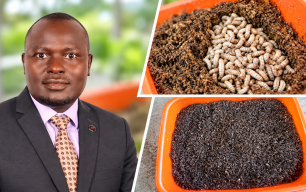
Mt. Elgon’s Living Nexus: Dr. Kimbowa’s Research on Forests, Water, and Communities

Mountainous regions like Uganda’s Mt. Elgon are critical sources of water for communities, agriculture, and industry, yet they face mounting pressures from deforestation, population growth, and climate variability. Dr. George Kimbowa, a lecturer in the Faculty of Engineering and Technology at Busitema University, has earned a PhD in Water Resources Engineering from Makerere University for his groundbreaking study on how tree cover and human population dynamics affect water availability in the Mt. Elgon Water Tower Region (MEWTR).
His research addresses a critical knowledge gap in understanding how biophysical and socio-institutional factors jointly influence water resources, especially in data-scarce mountainous landscapes.
The study focused on the Sipi River and River Manafwa sub-catchments, two key areas where forest ecosystems, human settlements, and water demand intersect. Dr. Kimbowa applied a participatory, mixed-methods approach, integrating long-term hydrological data (1990–2024), structural equation modeling (SEM), fuzzy cognitive mapping (FCM), Water Evaluation and Planning (WEAP) scenario modeling, and Q-methodology for stakeholder perception analysis.
Key findings revealed that tree cover in the region declined from 27.1% in 1990 to 18.9% in 2017, yet streamflow in the Sipi River sub-catchment increased during dry months, despite minimal changes in precipitation. This unexpected trend highlights the complex hydrological responses triggered by land-use transformations and underscores the need for nuanced, data-driven water management strategies.
The study also highlighted the institutional bottlenecks limiting sustainable forest-water governance. Poor coordination, limited funding, and weak stakeholder engagement were identified as the most significant barriers to effective agroforestry management. Q-methodology showed a broad recognition among stakeholders of the forests’ vital role in regulating water, but also emphasized the urgent need for inclusive governance structures that integrate local knowledge into planning and decision-making.
Dr. Kimbowa’s scenario modeling predicts that under optimistic development pathways, irrigation demand could increase by over 1800% by 2040, with potential unmet water demand exceeding 1,100 million cubic meters per year by 2060. Planned infrastructure interventions, such as reservoirs, could mitigate these deficits, but their success depends on coordinated governance and financial feasibility.
“The Mt. Elgon region is not just a source of water it is a lifeline for communities, agriculture, and the environment. My research shows that effective management requires understanding both ecological dynamics and human activities,” Dr. Kimbowa explained. “By integrating participatory methods with robust hydrological modeling, we can design adaptive strategies that are both locally relevant and scientifically sound.”
His findings show the importance of institutional empowerment, stakeholder engagement, and participatory scenario planning for sustainable forest-water management in mountain ecosystems. The study serves as a blueprint for policymakers, local governments, and development partners seeking to reduce future water stress, protect forested landscapes, and enhance water governance in rapidly transforming regions.
- 108 views