Busitema Researchers Develop Smart Packaging That Signals Food Freshness
The colour of a food package could one day tell a shopper something an expiry date cannot: whether the food inside is still fresh.
Researchers Annet Kajumba, Samson Rwahwire and Vincent Muwulya of Busitema University have developed smart packaging films that respond to changes in acidity and alkalinity, creating the possibility of packaging that visually indicates changes in the freshness of foods such as meat, fish and milk.
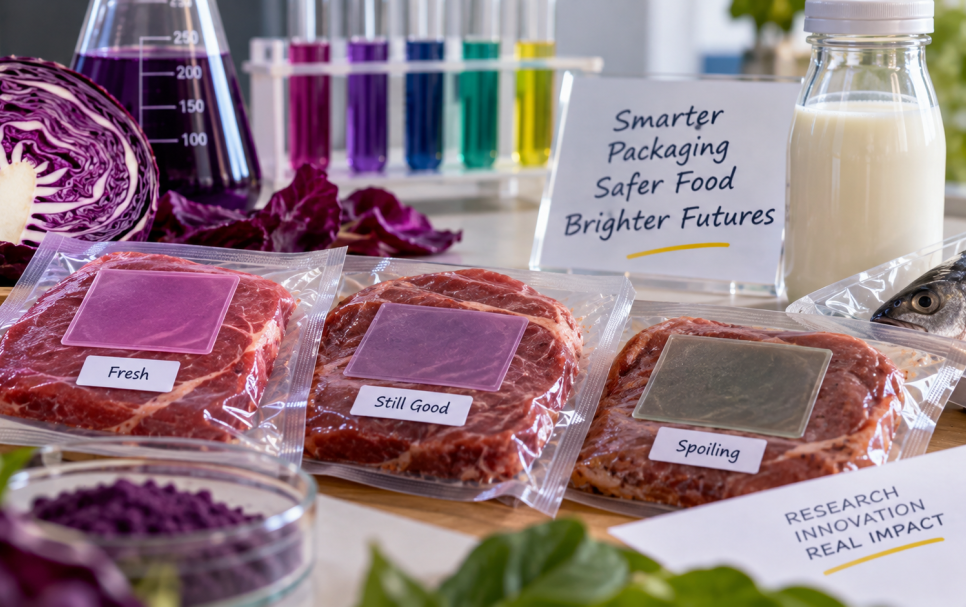
Their work combines red cabbage extract, chitosan, polyvinyl alcohol and palm kernel oil to produce films capable of changing colour under different pH conditions. Red cabbage contains anthocyanins, natural pigments whose colour changes as the surrounding chemical environment changes.
This allows the packaging material to do more than simply wrap or protect food. As food deteriorates and its chemical environment changes, the film could provide a visible indication of that change, helping consumers make better judgements about freshness.
The researchers tested different combinations of the materials and found that films containing blended anthocyanin extracts showed a stronger response to changes in pH than films containing single or mixed anthocyanins. The formulation also improved the colour stability and shelf life of the indicator, although adding the extracts reduced some of the film’s mechanical and thermal properties.
That balance is important because smart packaging must remain functional as packaging while also responding clearly enough to changes in the food it is designed to monitor.
The study points to potential applications in meat, fish and milk, foods whose freshness can change quickly and where knowing the actual condition of the product can be more useful than relying on a printed date alone.
The innovation could eventually contribute to efforts to reduce unnecessary food waste while giving consumers and food businesses another way to monitor product quality. It also creates room for further research into packaging materials that combine food protection with simple, visible information about what is happening inside the package.
The work has already attracted interest beyond publication. The researchers disclosed that part of the innovation has been submitted to the Uganda Registration Services Bureau for patent consideration, signalling an effort to explore its potential beyond the laboratory.
The research received support from the Royal Academy of Engineering through the Uganda Institution of Professional Engineers GCRF Project Phase 3, together with research support from Busitema University’s Directorate of Graduate Studies, Research and Innovations.
What began with the colour-changing pigments found naturally in red cabbage could therefore lead to a much smarter role for food packaging: not simply holding food, but helping people understand its condition.
The study, “The Effect of Anthocyanin Blend Extract on the Performance of Poly (Vinyl Alcohol), Chitosan, Palm Kernel Oil Smart Food Packaging Films,” was published in the Journal of Packaging Technology and Research in June 2024.
- 142 views