From Farm Waste to Cleaner Water: Busitema Researchers Test New Approach to Textile Pollution
Passion fruit waste, tamarind coatings, mulondo kernels and bean waste might appear to have little in common with polluted industrial water. Researchers at Busitema University, however, have shown that these agricultural materials could become part of an environmentally friendly approach to removing dyes from textile wastewater.
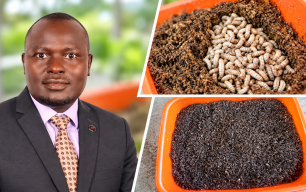
Ivan Ssebagala and Samson Rwahwire, researchers at Busitema University, converted the four agricultural wastes into carbon-based materials known as carbon dots and tested their ability to remove methylene blue, a widely used dye, from textile wastewater. Their study was published in Elsevier’s Next Materials.
The results were striking. Carbon dots produced from all four waste materials removed more than 95 per cent of the methylene blue under the study conditions. Tamarind-derived carbon dots recorded the highest removal efficiency at 99.2 per cent, while those made from mulondo reached 98.5 per cent, passion fruit 95.8 per cent and bean waste 95.4 per cent.
The researchers produced the carbon dots using a hydrothermal process, essentially using heat and pressure to transform the plant waste into tiny carbon-rich materials. They then tested how effectively the resulting materials could capture dye under different concentrations, treatment times and quantities of the adsorbent.
The study established optimal conditions at an adsorbent dose of 0.8 grams per litre, an initial methylene blue concentration of 6 milligrams per litre, and a treatment time of 19 minutes. The researchers found that the dye molecules bonded onto the varied surfaces of the carbon dots, helping remove them from the wastewater.
The work responds to a persistent environmental challenge. Synthetic dyes are widely used by textile industries, and wastewater containing these chemicals can become a source of pollution when inadequately treated before being released into the environment. Methylene blue was selected as the target pollutant in the study because of its widespread use and the environmental and health concerns associated with dye-contaminated water.
What gives the Busitema research wider significance is the material used to address the problem. Instead of relying entirely on commercially produced treatment materials, Ssebagala and Rwahwire investigated whether agricultural residues could be given a second use.
The researchers conclude that the carbon dots could serve as effective and relatively inexpensive biosorbents, with potential as an alternative to commercial activated carbon in some wastewater-remediation applications.
That creates an interesting link between agriculture, materials engineering and environmental protection. In an agricultural country such as Uganda, residues that might otherwise be discarded could potentially become raw materials for new technologies, creating value from waste while contributing to cleaner industrial processes.
Further work would still be needed before the approach could move from laboratory experiments into large-scale textile wastewater treatment. Questions around production at scale, repeated use, cost and performance in different industrial wastewater conditions would all need continued investigation.
Even so, the study demonstrates what can happen when locally available materials are viewed differently. Passion fruit coatings, tamarind waste, mulondo kernels and bean residues may begin as agricultural by-products, but research at Busitema University is showing that their usefulness may not end there.
The study, “Synthesis of green carbon dots from selected agricultural waste (peels/coatings) for removal of methylene blue from textile wastewater,” was published in Next Materials by Elsevier in 2025.
- 86 views