Busitema University's Dr. Samuel Baker Obakiro Represents Uganda at Prestigious AAAS-TWAS Science Diplomacy Workshop
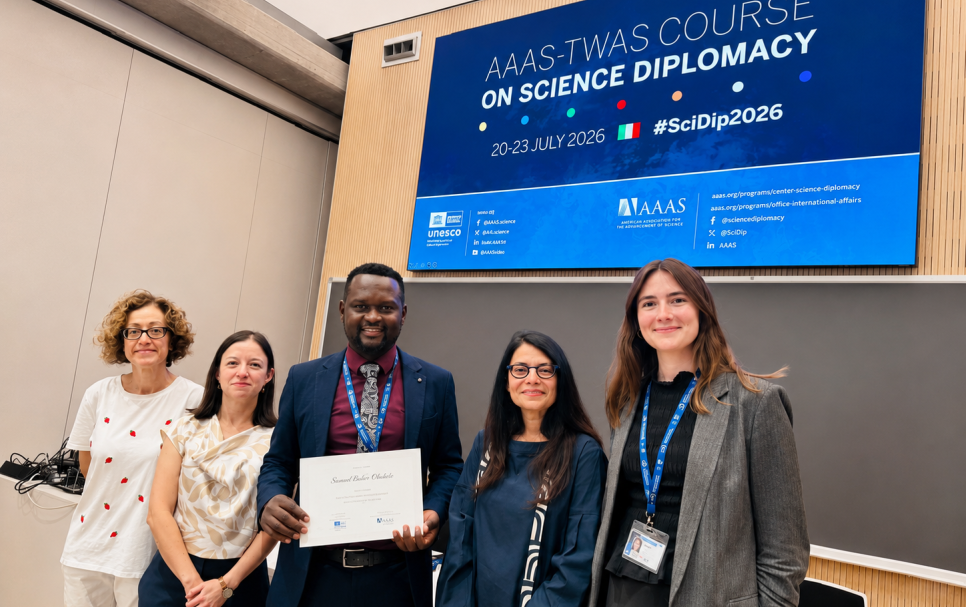
Busitema University continues to strengthen its international research profile after Dr. Samuel Baker Obakiro, Director of the Natural Products Research and Innovation Centre at the Faculty of Health Sciences, was selected to represent Uganda at the prestigious 2026 American Association for the Advancement of Science (AAAS) – The World Academy of Sciences (TWAS) Science Diplomacy Course held in Trieste, Italy.
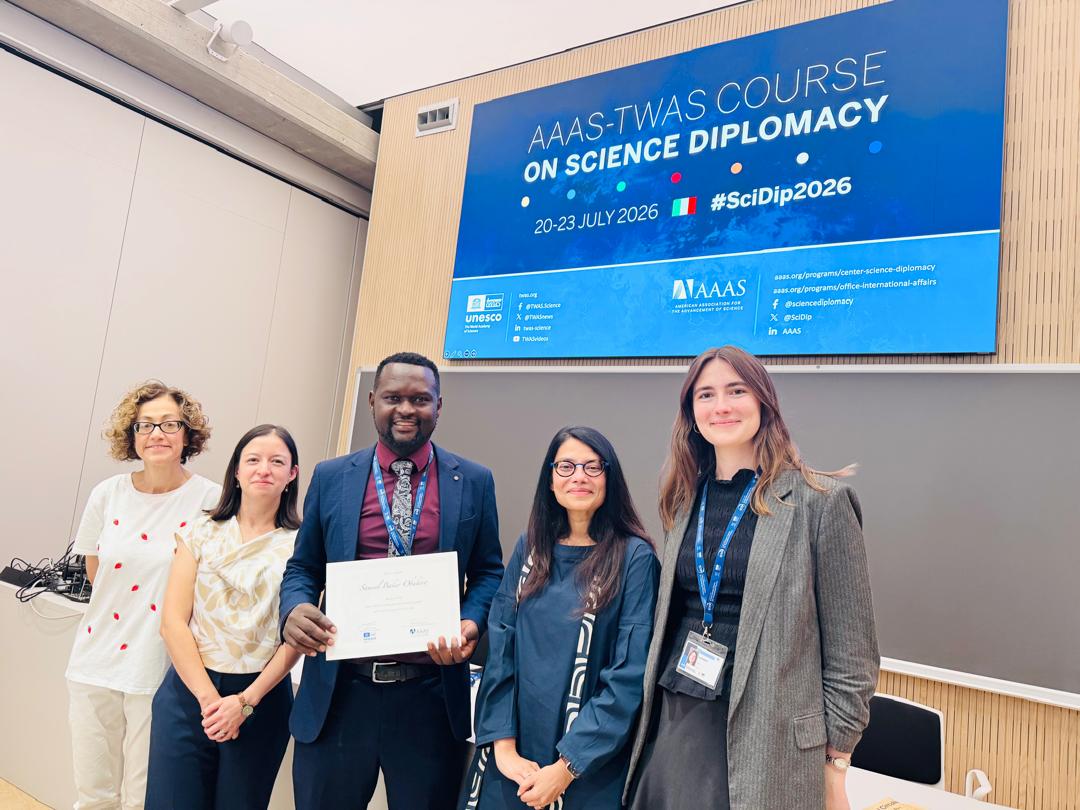
Dr. Obakiro attended the week-long programme alongside Ms. Brenda Nakazibwe, Team Leader of the Pathogen Economy Bureau at the Science, Technology and Innovation Secretariat in the Office of the President. The two formed Uganda's official delegation, participating in the highly competitive annual programme held from 20th to 23rdJuly 2026.
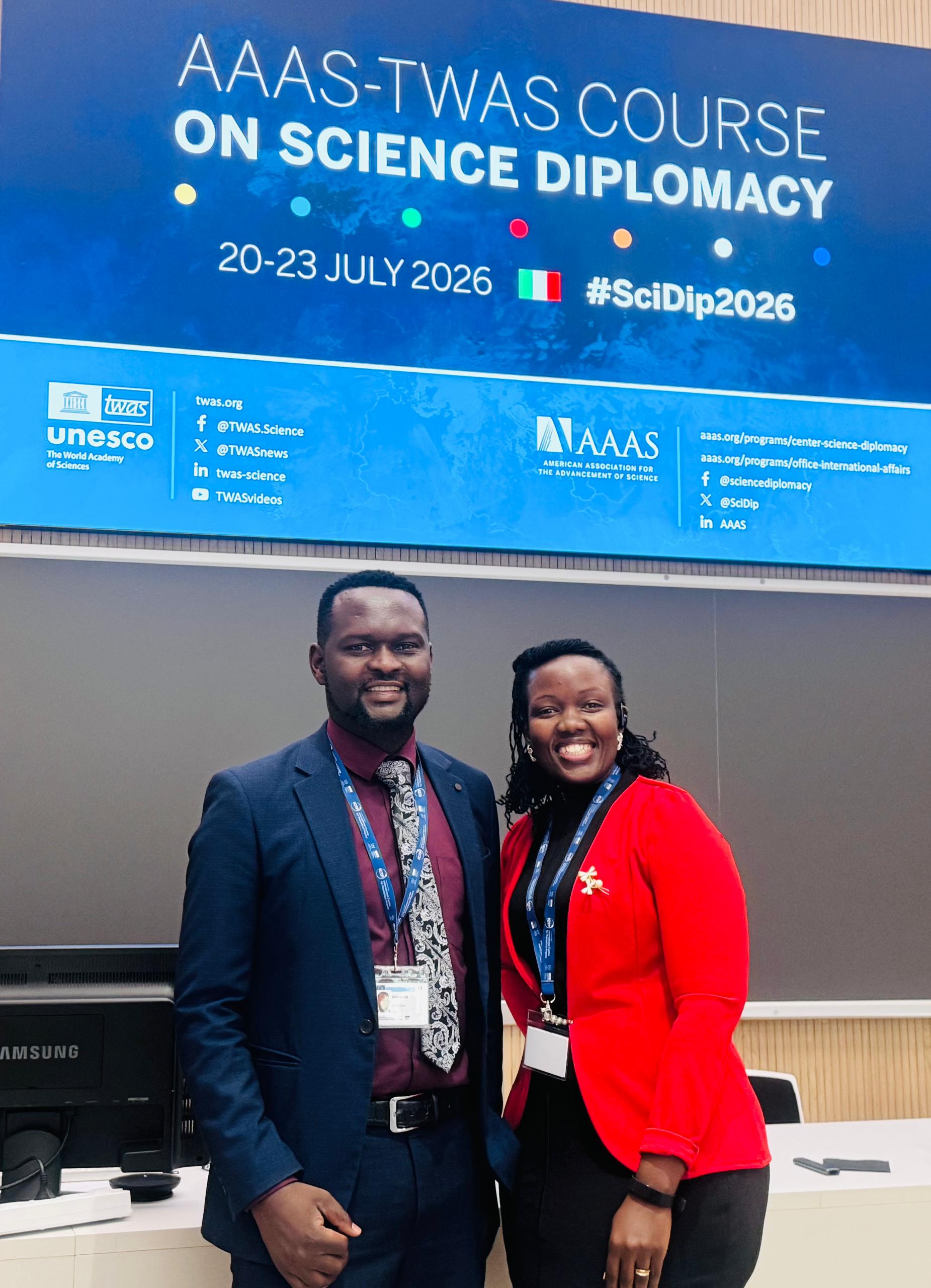
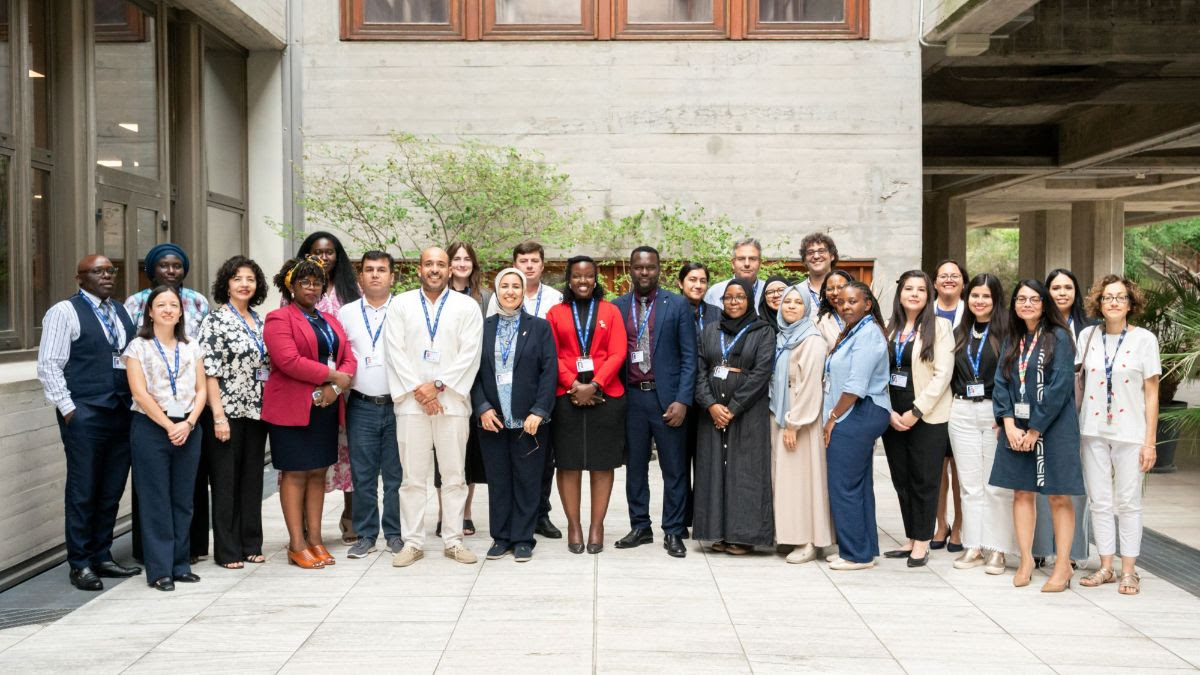
The AAAS-TWAS Science Diplomacy Course brings together carefully selected pairs of early-career scientists and policy advisors from around the world to strengthen the use of science diplomacy as a tool for promoting international cooperation and evidence-based policymaking. This year's edition attracted participants from 13 countries, including Uganda, Rwanda, South Africa, Morocco, Senegal, Malawi, the Democratic Republic of Congo, Honduras, Mexico, Paraguay, Jordan, Italy and Tajikistan.
Throughout the intensive training, participants explored how science can shape diplomacy, strengthen international partnerships and influence foreign policy. Discussions focused on addressing global challenges such as climate change, food security, emerging diseases, energy crisis, biosecurity risks and poverty through stronger international collaboration between scientists and policymakers.
The programme featured keynote speakers from France, Germany, Italy, Chile, Costa Rica, Pakistan, Kenya and the United States, who shared experiences on navigating today's rapidly changing geopolitical landscape, fostering international scientific cooperation and building large-scale research programmes.
For Dr. Obakiro, the experience was both professionally enriching and strategically important for Busitema University and Uganda's scientific community.
"I am extremely excited to have completed the course and become a member of AAAS. The knowledge gained is not only relevant to my personal career but also to Busitema University, Uganda and Africa as a whole," he said.
He noted that many African countries continue to face limited funding for cutting-edge research and advanced technologies, restricting their participation in global scientific initiatives. Even where quality research exists, inadequate investment often prevents promising innovations from reaching commercial scale.
According to Dr. Obakiro, science diplomacy provides a practical solution by linking scientific excellence with international partnerships, investment opportunities and policy engagement.
"To develop our nations, we need both quality evidence and scale. Science delivers the quality evidence while diplomacy delivers the scale. That is why embracing science diplomacy has become an urgent necessity."
The experience also reinforced Uganda's ambitions of becoming a USD 500 billion economy by 2040. Dr. Obakiro believes that integrating science diplomacy into national development strategies would strengthen international scientific collaboration, technology transfer, research funding and access to global markets.
He observed that Uganda possesses enormous scientific potential through investments in agriculture, health sciences, renewable energy, e-mobility, materials science, space science and the country's growing pathogen economy agenda. However, translating these strengths into economic value requires stronger engagement with international communities and effective scientific negotiations.
Drawing lessons from countries such as South Africa, which has successfully leveraged science diplomacy to attract major international investments in climate and health research, Dr. Obakiro believes Uganda can similarly position itself as a regional leader by capitalizing on its unique scientific opportunities, particularly in e-mobility and pathogen research and innovation.
He called for the establishment of the Uganda Science Diplomacy Bureau or a Science diplomacy department within the Science, Technology and Innovation Secretariat or the Ministry of Foreign Affairs to coordinate scientific engagement with international partners. He also recommended creating a Pan-East African Science Diplomacy Chapter with Uganda positioning itself as a leader, increasing government and private sector investment in priority scientific research programmes and strengthening the role of the Uganda National Academy of Sciences as an independent scientific advisory body to policy making.
For Busitema University, Dr. Obakiro's participation reflects the institution's growing contribution to global scientific dialogue and its commitment to producing research that addresses national priorities while advancing international collaboration.
As Uganda increasingly looks to science, technology and innovation to drive socio-economic transformation, the University's involvement in global platforms such as the AAAS-TWAS Science Diplomacy Course demonstrates its expanding role in shaping evidence-based solutions with regional and global impact.
- 461 views