IFC Investment Experience Offers Lessons for Taking Busitema Research Beyond the University
A promising agricultural innovation can prove itself in a laboratory or field trial and still never reach the farmer who needs it. Moving from research to regular use takes money, production capacity, business skills, strong management and, often, partners willing to invest for the long term.
That gap between a good idea and real-world impact is what makes a recent International Finance Corporation (IFC) experience worth examining at Busitema University. IFC, the private-sector arm of the World Bank Group, has spent more than a decade working with Thailand-based private equity fund manager Lakeshore Capital, showing how investment can be used not only to grow companies, but also to strengthen the systems that allow them to create jobs and operate responsibly.
IFC first invested in Lakeshore’s inaugural fund as an anchor investor in 2014 and has remained involved across subsequent funds. Its contribution has extended beyond finance to environmental, social and governance systems, climate policies, workplace standards and human-resource practices. The results are visible across Lakeshore’s portfolio: companies in its first two funds employ about 8,600 full-time workers, with more than 1,800 jobs added since investment.
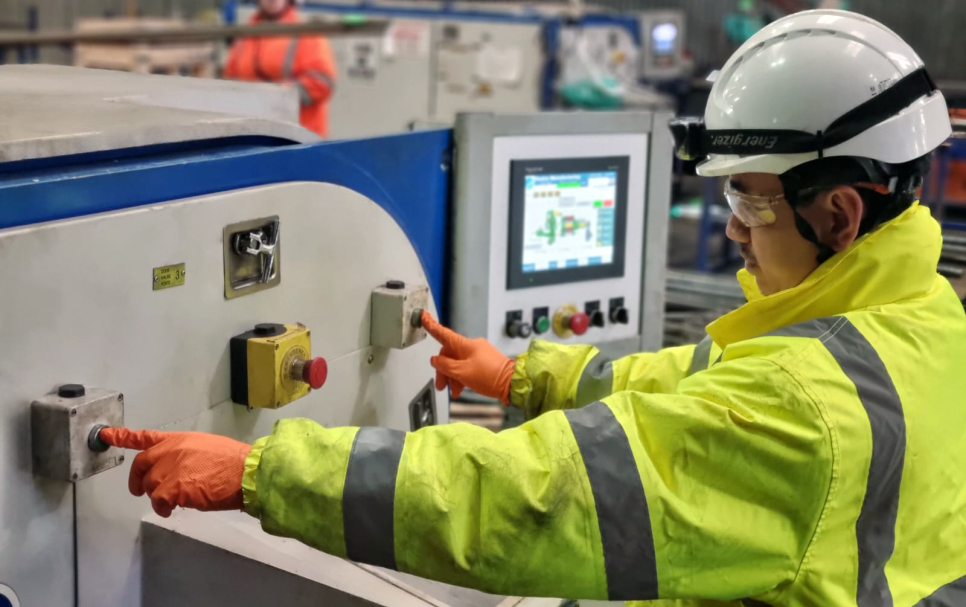
Dextra Group, a specialised manufacturer backed by Lakeshore, provides one example. The company employs more than 1,000 people, including over 200 positions added since Lakeshore’s investment, and its products are now used in more than 20,000 projects across 55 countries. IFC presents that growth alongside improvements in technical capability, workforce development and responsible business practices rather than as a story of capital alone.
Dextra manufactures construction products in Thailand, not agricultural technologies in Uganda. The value of its experience to Busitema lies elsewhere. It demonstrates what can happen when an idea or capable enterprise has access to finance and, at the same time, develops the management, skills, standards and partnerships required to grow.
Busitema’s Faculty of Agriculture and Animal Sciences works in fields where research can have immediate practical value to farmers and agricultural businesses. Crop and animal production, agribusiness, post-harvest management and related areas can produce knowledge and innovations capable of improving productivity or opening new commercial opportunities. Yet evidence that something works is only one stage in getting it into farmers’ hands.
A researcher may develop a promising product, technique or service, but moving it beyond trials raises a different set of questions. Can it be produced consistently? Will farmers be able to afford it? Is there a viable market? What standards must be met? Who takes responsibility for manufacturing or distribution? What happens when research funding ends?
Those questions matter especially in Eastern Uganda, where agricultural communities are not short of problems that research can help solve. Farmers continue to deal with productivity constraints, post-harvest losses, changing weather conditions, access to inputs and difficulties reaching profitable markets. Solutions developed through universities can contribute, but their impact remains limited when they cannot move beyond small demonstrations or short-term projects.
Private investment is one possible bridge. It will not suit every research output, and universities should not treat every academic project as a potential business. Some research is meant to improve understanding, inform public policy or strengthen teaching. But when an innovation shows genuine commercial potential, the IFC experience suggests that researchers may need to think about its route to scale much earlier.
That could mean working with agribusinesses during product development, building evidence about production costs and market demand, strengthening intellectual-property management, involving farmer organisations in testing, or working with investors and financial institutions once an innovation has demonstrated both scientific and commercial promise.
Busitema’s own published strategic framework points in this direction. The University identifies high-impact research, innovation and entrepreneurship as a strategic priority and lists agriculture and environment among its research themes. It also calls for stronger industrial collaboration, entrepreneurial capacity among staff and students, technology business incubation and systems that improve the impact of research.
The same framework goes further by calling for partnerships with public, private and commercial organisations, increased translational research and stronger links with industry to support the commercialisation of research products and innovations.
Seen against those ambitions, the IFC raises practical questions about whether potentially valuable Busitema research is being prepared not only for publication, but also for adoption, partnership and, where appropriate, investment.
The Faculty of Agriculture and Animal Sciences has an obvious place in that conversation, but agricultural growth cannot be separated from the resources on which it depends. Expansion in farming or agro-processing can increase pressure on land, water and ecosystems if environmental considerations are introduced too late.
That makes expertise from the Faculty of Natural Resources and Environmental Sciences equally important. Responsible investment requires evidence about environmental consequences, climate risks and the sustainable use of natural resources. IFC’s work with Lakeshore placed environmental, social and governance standards alongside financial investment, a reminder that successful expansion cannot be judged by revenue and job creation alone.
Closer collaboration between agricultural and environmental researchers could therefore strengthen innovations before they reach the market. A new agricultural enterprise should be able to demonstrate not only that its product works and has customers, but also that the way it grows will remain environmentally and socially sustainable.
The Fourth National Development Plan, covering FY2025/26 to FY2029/30, seeks higher household incomes, employment and sustainable socioeconomic transformation. Among its five objectives are increasing value addition and strengthening the private sector to create jobs. Agriculture is particularly important because NDP IV identifies it as the main livelihood for most Ugandans and describes value addition to agriculture as the foundation of agro-industrialisation, with stronger productivity needed to support industry, jobs and exports.
That places research universities within a much larger economic chain. Farmers identify problems through experience. Researchers can investigate those problems and test possible solutions. Agribusiness specialists can determine whether those solutions make economic sense. Environmental scientists can examine whether they remain sustainable as their use expands. Industry can provide manufacturing and market access, while finance can provide the resources needed to move from a promising pilot to wider production.
A technology that reduces post-harvest losses could support a local manufacturing enterprise. An animal-production innovation could become a product used by farmers beyond the communities where it was first tested. A processing solution could add value closer to where crops are produced, keeping more income within farming communities. A university-linked enterprise could also create technical jobs for graduates whose skills might otherwise struggle to find an outlet.
None of those outcomes is guaranteed simply because private capital becomes available. The experience highlighted by IFC shows why investment has to be matched with capable people, good governance, environmental responsibility and strong institutions.
Busitema already has researchers, students and communities working on problems with economic and social importance. The next challenge is ensuring that the strongest ideas have somewhere to go once the research proves that they work.
Some will move into further study. Others may inform government or farming practice. A few may be strong enough to become products, services or enterprises capable of reaching many more people than a university project ever could.
Creating clearer pathways between research, industry and responsible investment would give those ideas that chance. It would also bring Busitema closer to an ambition already reflected in its strategic framework and in NDP IV: turning knowledge and innovation into visible improvements in productivity, employment and sustainable development.
Source: This article was developed from the International Finance Corporation (IFC), a member of the World Bank Group, feature “Building Infrastructure, Strengthening Workforces.”
The Uganda policy context draws on the Fourth National Development Plan (NDP IV) FY2025/26–FY2029/30, published by Uganda’s National Planning Authority.
- 34 views