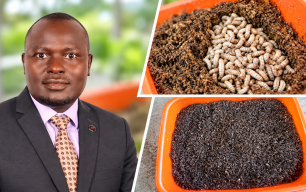
Dr. Catherine Namuga Awarded PhD, Unveils Innovative Bioactive Dressing to Improve Wound Care

Dr. Catherine Namuga, a Lecturer at Busitema University’s Faculty of Engineering and Technology, has successfully earned her PhD in Engineering from Makerere University. Her research introduces an innovative biomedical solution, a bioactive gauze dressing infused with herb-loaded nanoparticles, offering promising advances in faster wound healing and improved patient care.
Wound healing is a complex process, and when it is delayed or impaired, patients face increased risks of infection, prolonged hospitalization, and higher medical costs. Gauze remains one of the most widely used dressing materials because of its affordability and accessibility, yet conventional gauze offers minimal protection against bacterial invasion. This limitation often slows recovery and complicates treatment.
In Uganda, as in many developing countries, herbal medicine continues to play a central role in healthcare. Medicinal plants are valued for their antibacterial, antioxidant, and anti-inflammatory properties, which support natural healing. However, traditional herbal remedies often require large doses and extended treatment periods, which can reduce patient adherence and limit their clinical impact. Dr. Namuga’s research sought to overcome these challenges by combining the therapeutic potential of herbal medicine with the precision of nanotechnology, creating a dressing that is both effective and practical.
Her study began with the extraction of bioactive compounds from three medicinal plants commonly used in traditional wound care: Bidens pilosa, Ageratum conyzoides, and Hoslundia opposita. Various extraction methods and solvents of differing polarity were tested to identify the most efficient techniques. The resulting extracts were evaluated for antibacterial, antibiofilm, and antioxidant activity, as well as for the presence of phytochemicals responsible for these biological effects.
The antibacterial assays targeted pathogens frequently associated with wound infections. These microorganisms are notorious for causing severe infections and delaying wound recovery. The findings revealed that highly polar solvents produced higher yields of bioactive compounds. Among the extracts tested, the 100 percent methanol extract of Hoslundia opposita, obtained through maceration, demonstrated the strongest biological activity. This extract exhibited superior antibacterial, antibiofilm, and antioxidant properties, attributed to its rich phytochemical profile. Further analysis using Gas Chromatography, Mass Spectrometry (GC-MS) and Liquid Chromatography, Mass Spectrometry (LC-MS) identified key compounds responsible for these effects.
To enhance therapeutic performance, Dr. Namuga employed nanoencapsulation technology. The selected extract was encapsulated in chitosan nanoparticles using the ionic gelation method. Chitosan is widely recognized in biomedical engineering for its biocompatibility, antimicrobial properties, and ability to support controlled drug release. The nanoparticle formulation was optimized using Response Surface Methodology (RSM), a statistical tool that determines optimal experimental conditions. The resulting nanoparticles were spherical, with an average size of approximately 212 nanometers, a zeta potential of 40 millivolts, and a polydispersity index of 0.22, indicating stability and uniform distribution. The formulation achieved an encapsulation efficiency of 79.1 percent and a drug loading capacity of 9.82 percent.
One of the most significant advantages of nanoencapsulation observed in the study was sustained drug release. Laboratory tests showed that the nanoparticles released about 50 percent of the herbal extract over a 24-hour period, compared to nearly 100 percent release from the free extract within the same timeframe. This controlled release helps maintain therapeutic levels of active compounds for longer durations, reducing the need for frequent dressing changes.
The herb-loaded nanoparticles also demonstrated enhanced antibacterial activity, with minimum inhibitory concentrations ranging from 1.875 to 3.275 milligrams per milliliter against the tested bacterial strains. These results confirmed that nanoencapsulation improved the antimicrobial effectiveness of the herbal extract.
The nanoparticles were then incorporated into gauze dressings to evaluate their performance in wound treatment. The bioactive gauze was tested for water absorption capacity, moisture retention, antibacterial activity, and wound healing effectiveness. Experimental studies using Wistar rats revealed that wounds treated with the nanoparticle-functionalized gauze achieved 93 percent closure by the eighteenth day, compared to only 41 percent closure in wounds treated with conventional gauze. These findings clearly demonstrated that the bioactive dressing significantly accelerated wound healing.
Safety assessments were also conducted to ensure compatibility with skin tissue. Skin irritation tests performed on rabbits showed no adverse reactions, confirming that the dressing is safe for biomedical applications. Importantly, the incorporation of nanoparticles did not compromise the gauze’s physical properties, such as water absorption capacity, ensuring that the dressing retained its essential functionality.
Further phytochemical analysis identified rutin and 4′′′-acetylvitexin-2′′-O-rhamnoside as major bioactive compounds in the methanol extract of Hoslundia opposita. These compounds are believed to play a central role in the extract’s antibacterial and wound-healing properties.
As a Lecturer in the Faculty of Engineering and Technology at Busitema University, her work combines engineering, biotechnology, and traditional medicine to address pressing healthcare challenges.
- 115 views